
The way Americans move money is getting less cash-like and more split-brained.
At the checkout counter, cards are everywhere. Behind the scenes, the big dollars still move through bank rails. That is the clean read from the Federal Reserve's initial findings from its 2025 triennial payments study, released July 1.
The Fed said consumers and businesses made 236.6 billion noncash payments in 2024. That total has more than tripled since 2000. Cards made up more than three quarters of payments by number, while ACH payments accounted for almost three quarters of noncash payments by value.
In plain English: cards won the count. ACH won the money.
Why cards keep taking over daily spending
Cards are built for small, frequent payments. Groceries. Gas. Subscriptions. Online orders you forgot you set to renew. Debit cards still made up the majority of card payments, according to the Fed, but credit card payments grew faster than debit card payments for the first time in almost a decade.
That does not automatically mean households are in trouble. A credit card can be a payment tool, a rewards tool, or a borrowing tool. The problem starts when the payment tool turns into a balance that rolls over at a high interest rate.
For readers, the useful habit is boring but powerful: separate the purchase method from the funding source. If the card is paid in full, it is mostly a convenience layer. If it is not, the interest rate becomes part of the price.
ACH is where the big money moves
ACH is less visible than a card tap, but it matters more for large transfers. Payroll, bill pay, insurance payments, business invoices, brokerage transfers, mortgage servicing, and plenty of fintech account movements can run through ACH.
That is why ACH can have a smaller share of payment count while carrying a much larger share of payment value. One paycheck or mortgage draft can outweigh a lot of coffee purchases.
This is also where speed and safety matter. Faster payments are useful when money needs to move quickly, but fraud controls, identity checks, and account protections still matter. A faster bad transfer is not an upgrade for the person who loses money.
Checks and ATM withdrawals keep fading
The Fed said check payments and ATM cash withdrawals continued to decline by both number and value. That tracks with how many households already live: direct deposit, autopay, cards, mobile wallets, bank apps, and fewer trips to the ATM.
Still, fewer checks does not mean no checks. Renters, small businesses, contractors, local governments, estates, and older relatives can keep paper payments alive longer than the headlines suggest. Anyone managing household money still needs to watch for check fraud, delayed deposits, and stale payment records.
What this means for your money habits
The payments story is really a budgeting story. If most spending runs through cards and apps, the bank balance can lag behind real life. Autopay can hide bill creep. Subscriptions can scatter across accounts. A checking account can look fine until several scheduled payments hit at once.
Daily Money Radar's calculators page can help turn those money flows into actual numbers. If higher prices are part of the pressure, the inflation calculator can show how buying power changes over time. For rates and household debt, see what Fed rate decisions mean for your money.
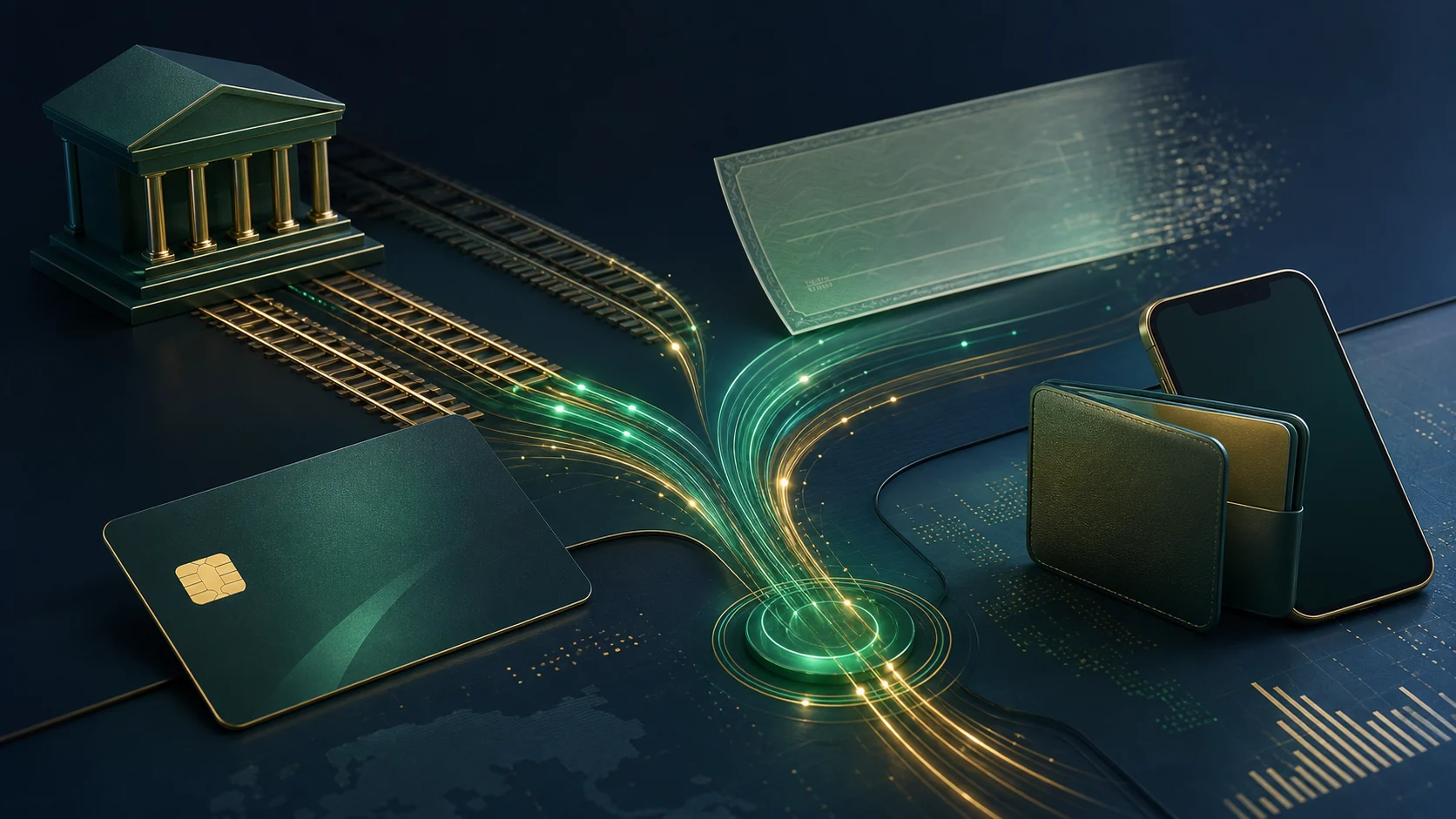
The takeaway is not that one payment method is best. It is that each rail has a job. Cards are convenient. ACH moves big recurring money. Checks are shrinking but not gone. Cash is less central than it used to be, but it still matters for some households.
Treat the payment method as part of the financial decision, not just the last step at checkout.
Sources and further reading
- Federal Reserve: Federal Reserve issues initial findings from its 2025 triennial payments study
- Federal Reserve: Federal Reserve Payments Study
- Daily Money Radar: Fed rate decisions explained
This article is educational only. It is not personalized banking, tax, legal, investment, or financial advice.